How Do Real Estate Agents Use Video To Rank In AI Search?
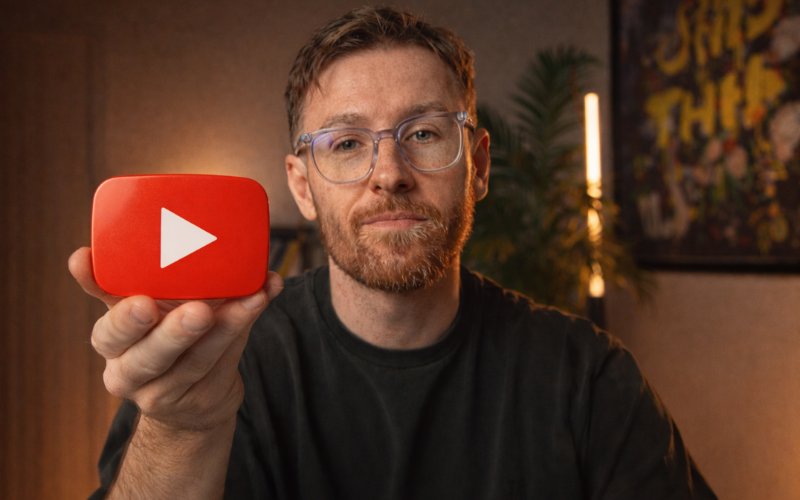

'I don't have time to make videos.' Yes, you do.
'I don't know what to talk about.' Yes, you do.
'I'm not a video person.' Nobody is until they start.
The excuse factory runs 24/7 in real estate. And I get it. You're busy showing homes, managing clients, and trying not to drown in admin. Video feels like one more thing on an already overflowing plate.
But you're probably sitting on 10, 20, maybe 50 blog posts right now that could be turned into video scripts with AI in under 10 minutes (not an exaggeration).
From content you've already written but haven't distributed yet.
And the reason this matters more in 2026 than it ever has before is because YouTube is the #1 cited source in Google's AI Mode and ChatGPT.
This means, it's a traffic and lead driver.
P.S. If you need an AI SEO company to do this for you... well, book a call.
BrightEdge tracked AI citations across ChatGPT, Perplexity, and Google's AI Overviews from May 2024 to September 2025. YouTube averages a 20% citation share across all AI platforms.
That makes it the single most cited video source. 200 times more than any competitor.
And this isn't just Google playing favourites with its own platform. ChatGPT and Perplexity have zero corporate reason to prioritise YouTube.
They do it anyway.
Because YouTube has the depth, the transcripts, and the structured content that AI models need to pull answers from for real estate searches.
Surfer's AI Citation Report backed this up — across 36 million AI Overviews and 46 million citations, YouTube sat at approximately 23% of all citations. Ahead of Wikipedia. Ahead of Reddit. Ahead of every government site, every news outlet, every niche blog.
Let that sink in for a second.
When a potential buyer types 'best neighbourhoods in [your city] for families' into ChatGPT, search engines aren't only pulling from website content, it's pulling from YouTube transcripts, too.
And if you don't have the right video content, you won't exist in ChatGPT's answers by the end of 2026.
It's that simple.
I'm not asking you to become a YouTuber. I'm not asking you to buy a ring light, learn Final Cut Pro, or start doing jump cuts.
(You're probably exhausted from dancing on Instagram already to sell a house... am I right?)
I'm asking you to take the blog posts you've already written — the neighbourhood guides, the market updates, the first-time buyer tips — and turn them into video scripts using AI.
Here's the workflow and prompt:
That's it.
You've just created a piece of content that AI models can cite, Google can index, and potential clients can watch at 2 AM when they're lying in bed thinking about moving.
The blog post was the hard part.
You already did the research. You already organised the thoughts. The video is just you saying what you already wrote — but now it lives on the platform that AI trusts more than any other.
'Oh but I'll only get 200 views...'
This is probably the most common pushback I hear.
And it tells me that most agents are measuring video success the same way they measure Instagram success.
Views don't matter. Not in the way you think.
A neighbourhood guide with 200 views on YouTube isn't competing for virality. Your job is to attract high-intent buyers and sellers in your market.
That's it.
Nate Clark started his YouTube channel 30 days ago and has already secured a listing. His YouTube videos, on average, generate 15–45 views. He generated 300 views in 30 days.
What does that show you?
These are the warmest leads you'll ever get. By the time they contact you, they already feel like they know you.
Agents with small YouTube channels — under 500 subscribers, sometimes under 300 — report consistent inbound leads from their content. Not thousands of views. Just the right views.
Compare that to the leads you're buying from Zillow or whatever platform you're currently renting your pipeline from. Those people don't know you. They don't trust you. They gave their number to a form and now six agents are fighting over the same callback.
I knew this was coming.
The idea is seductive. You record a few minutes of yourself talking, feed it to some AI avatar tool, and suddenly 'you' are pumping out videos while the real you is at a showing.
Sounds efficient. Sounds smart.
It's also the fastest way to destroy the one thing that makes video work for you in the first place — trust.
The entire value of video for agents is that it's you.
Your face, your voice, your knowledge of that specific street, that specific neighbourhood, that specific market. When someone watches a 6-minute video of you walking through your local area and explaining why families love it there, they're not just absorbing information. They're deciding whether they like you. Whether they'd trust you with the biggest financial decision of their life.
An AI clone can't do that.
It looks like you. It sounds close to you. But something's off.
And people feel it… You’ve seen it, I know you have. The uncanny valley isn't just a tech problem.
It's a trust problem. And in an industry where trust is literally your product, that's not a risk worth taking.
Don't get me wrong, AI clones will improve. They already have. But the moment your audience finds out (and they will), you've lost something you can't get back.
There's another issue nobody talks about. If every agent starts using AI avatars to mass-produce video content, what happens?
Saturation. Hundreds of identical-feeling videos flooding YouTube.
That's the opposite of a moat. That's a race to the bottom.
The agents who win on YouTube over the next few years won't be the ones who produced the most content. They'll be the ones who produced the most real content. The stuff that's imperfect, a little rough around the edges, but unmistakably human.
Let's go back to where we started.
'I don't have time.' You don't have to write anything new. You're repurposing what already exists.
'I don't know what to talk about.' Your blog posts are a content library waiting to be spoken out loud.
'I'm not good on camera.' Nobody watching a local neighbourhood guide expects you to be a TV presenter. They expect you to know the area. That's it.
AI has made this process absurdly simple. Feed your blog into a model. Get a script back. Record it on your phone. Upload it to YouTube.
The agent who does this 20 times over the next six months will have 20 indexed, citable, searchable video assets working for them around the clock.
The agent who doesn't will keep wondering why their competitor shows up in AI answers and they don't.
This isn't about being a content creator. Trust me, I would never wish that on you. Video is going to be the only surviving moat left when AI models become so good, people won't know who to trust.
Even if you don't have the content, there are millions of blogs online you can repurpose. As long as you're adding your unique view and opinion, use whatever form of inspiration you want.
The gap between agents getting cited in AI using video, and agents who aren't is embarrassingly small.
The only question is whether you'll close it.
I've watched this pattern play out in SEO for over a decade. The people who act early on a shift like this build an advantage that compounds.
The people who wait until it's obvious end up fighting for scraps (hello Zillow owning Google for 2 decades or hello agents who didn't use Google My Business when it first launched).